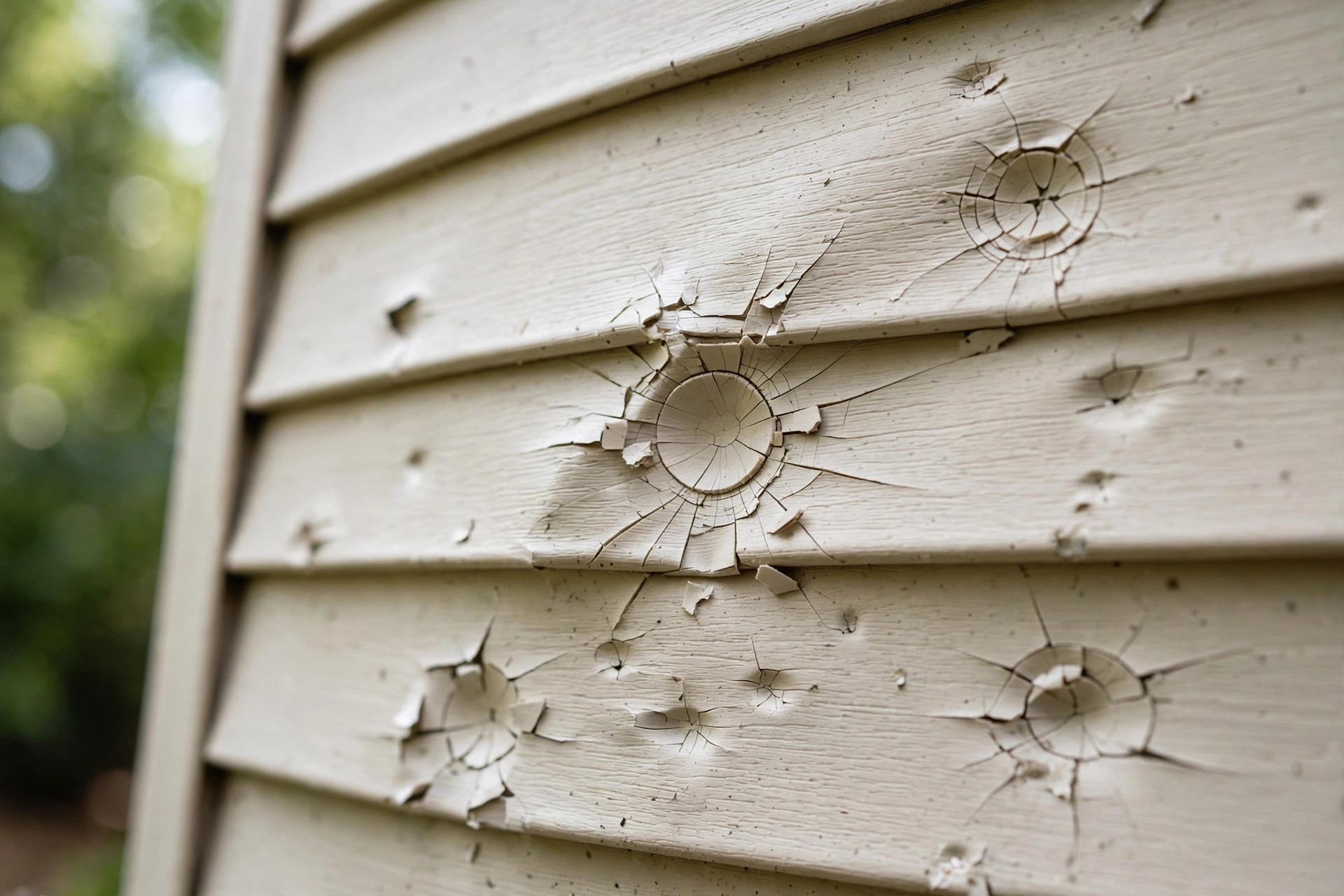
Hail does not just dent cars — it punishes siding too. Even a brief hailstorm can crack vinyl, dent aluminum, and bruise wood siding in ways that are not always obvious from the ground. For DC homeowners, knowing how to spot hail damage and what to do about it protects both your home and your insurance options.
How Hail Damages Different Siding Types
Vinyl siding is the most vulnerable to cracking. Hailstones strike with surprising force, and cold, brittle vinyl can crack or shatter on impact. Look for circular cracks, holes, or shattered panel sections, often concentrated on the windward side of the house.
Aluminum siding dents rather than cracks. Hail leaves a pattern of small round dents that may seem cosmetic but can compromise the finish and invite corrosion over time.
Wood siding can split, dent, or bruise. Hail bruises crush wood fibers beneath the paint, creating soft spots that eventually let moisture in — even when the paint still looks intact.
Fiber cement and steel hold up best. They may show minor paint chipping at impact points but rarely suffer structural damage from typical hail.
How to Inspect After a Hailstorm
Wait until it is safe, then walk the perimeter at ground level. Look for the telltale signs: dents and cracks in siding, damaged window screens, dented gutters and downspouts, and stripped paint. Damage to gutters, trim, and outdoor fixtures on the same side of the house strongly suggests the siding took hits too.
Check the sides of the house facing the storm's direction most carefully — hail damage is rarely uniform. Use binoculars for upper stories rather than climbing a ladder. And remember: hail bruises on wood and small cracks in vinyl are easy to miss, which is why a professional inspection is worth it.
Why a Professional Inspection Matters
Contractors experienced with hail damage know what to look for: the pattern and density of impacts, bruised wood that will fail later, cracked panels that will leak, and compromised flashing. They document damage systematically — the kind of documentation insurance adjusters expect.
Timing matters as well. Most insurance policies expect claims to be filed reasonably promptly after the event. An early professional assessment preserves your options, even if you decide to wait on the actual repair work.
Repairing Hail-Damaged Siding
Isolated damage can often be repaired by replacing individual panels or boards with matching material. When damage is widespread, or the siding was already aging, a larger replacement may be more cost-effective — and it is worth discussing with both your contractor and your insurer, since coverage sometimes applies to full slopes or elevations rather than spot repairs.
Frequently Asked Questions
How big does hail need to be to damage siding?
It varies by material and temperature. Vinyl becomes more brittle in cold weather, so even modest hail can crack it on a cold day. Aluminum dents from relatively small stones. When in doubt after any hailstorm, inspect.
Will my homeowner's insurance cover hail damage to siding?
Hail is typically a covered peril under standard homeowner's policies. Document the damage, get a professional assessment, and check your deductible — then decide whether filing makes sense.
Can hail damage be invisible?
Yes. Hail bruises on wood siding crush fibers under intact paint, and hairline cracks in vinyl may be hard to see from the ground. These hidden injuries cause problems months later, which is why professional inspection matters.
Should I replace with a more hail-resistant material?
If your area sees frequent hail and your siding needs replacement anyway, upgrading to impact-resistant options like steel or fiber cement is worth discussing with your contractor.
Hail just hit your neighborhood? Call (206) 360-4969 and we will connect you with a local siding pro for a thorough hail damage inspection and a clear, honest repair plan.
Ready to Talk Siding?
Call (206) 360-4969 and get connected with a local Washington, DC siding contractor today.
☎ (206) 360-4969