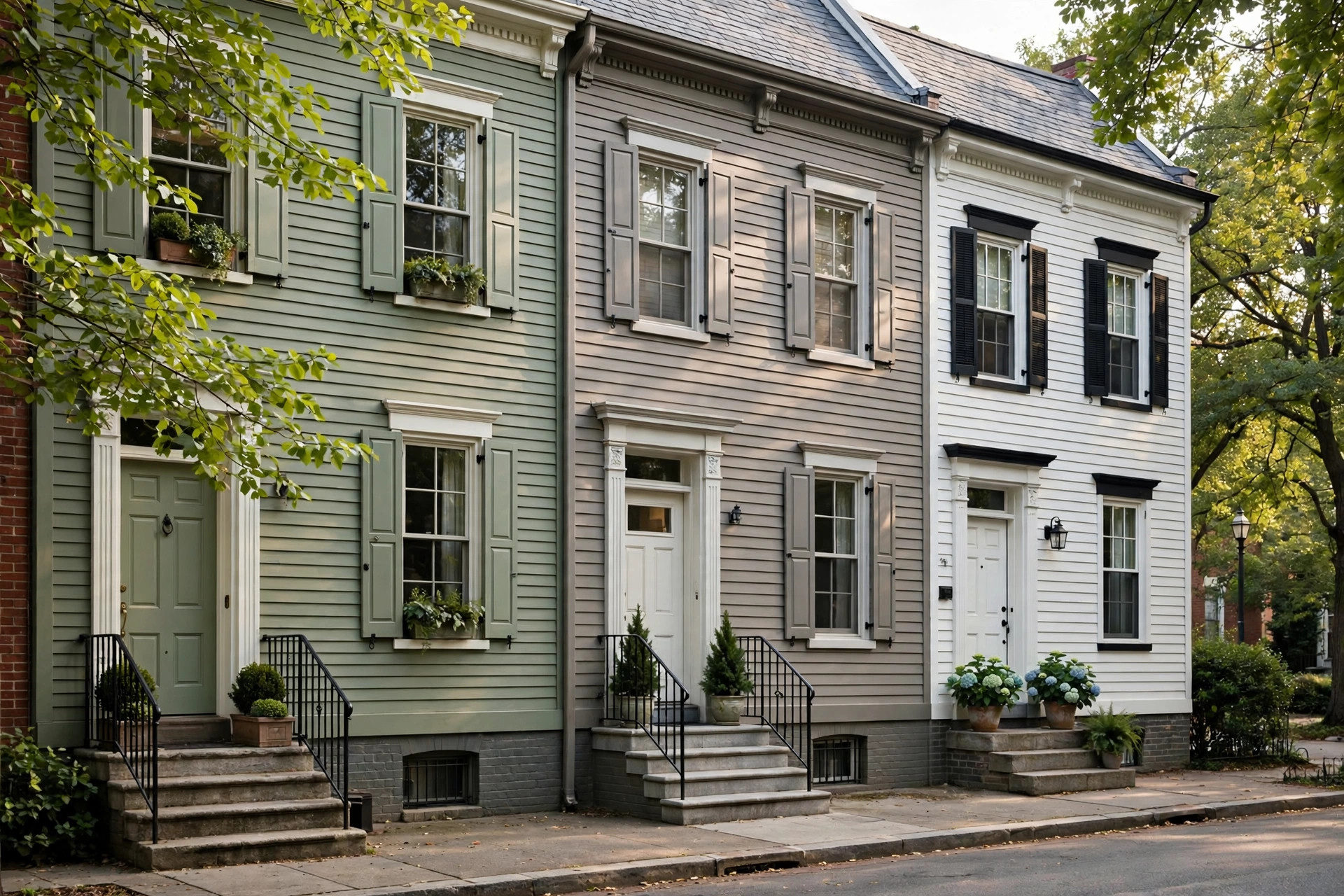
Choose your siding color by weighing your home's architecture, existing roof and trim colors, neighborhood context, and sun exposure. In Washington, DC, also check historic district or HOA rules before falling in love with a shade — some areas restrict what you can install.
Start With Your Home's Architecture
Color should suit the style of the house. Traditional colonials and Victorians carry classic palettes well — whites, creams, soft grays, muted blues. Craftsman and bungalow styles suit earthy tones like sage, olive, and warm browns. Modern and contemporary homes can handle bolder contrasts and darker dramatic shades.
DC's rowhouses have their own visual language. A color that looks stunning on a detached suburban colonial can feel out of place in a continuous row of historic facades. Walk your block and notice which colors feel harmonious — your home should stand out for its condition, not clash with its streetscape.
Coordinate With What Is Staying
Your roof, brick, stone, and trim are not changing, so the siding must work with them. Pull the undertones: a brown roof pairs better with warm siding tones, while a gray or black roof suits cool grays and blues. If your rowhouse has exposed brick on the front, choose a siding color for the sides and rear that complements the brick rather than competing with it.
Trim color matters enormously. Crisp white trim makes almost any siding color look intentional, while matching trim too closely to the siding can make the whole house look flat and washed out. Aim for enough contrast to define the architecture.
Historic Districts and HOAs
Large parts of Washington, DC fall within historic districts — Capitol Hill, Georgetown, and many others — where exterior changes may require design review. Some districts limit siding materials and colors to those consistent with the area's historic character. Always check requirements before ordering materials.
Condo associations and HOAs may have their own approved color lists. Getting approval in writing before installation avoids the painful scenario of being ordered to redo finished work.
Light vs. Dark: The Practical Trade-Offs
- Light colors reflect heat (lower cooling bills in DC summers), show less fading over time, and make small homes look larger. They do show dirt and mildew more readily in humid climates.
- Dark colors look striking and modern but absorb more heat — which can stress vinyl siding and increase cooling loads. Fading is also more noticeable on dark shades.
- Mid-tones (warm grays, sage greens, classic blues) split the difference and tend to age gracefully.
Test Before You Commit
Never choose from a tiny swatch alone. Get large sample panels and view them on your home at different times of day — colors shift dramatically between morning, noon, and evening light. Live with the samples for a few days, and view them alongside your roof and trim. What looks perfect in a showroom can surprise you on a full wall.
Frequently Asked Questions
What is the most popular siding color?
Neutrals dominate — whites, light grays, and warm beiges remain the most common choices nationally because they suit many architectures and have broad resale appeal. That said, the best color is the one that suits your specific home.
Will dark siding void my warranty?
Some vinyl siding manufacturers restrict very dark colors because of heat-related warping risk. Check the product warranty for color limitations before choosing a dark shade.
How often will I need to repaint colored siding?
Factory-finished siding (vinyl, fiber cement with baked-on color) needs no painting — just cleaning. Painted wood siding in DC's climate typically needs attention every several years depending on exposure and prep quality.
Can I change my color later?
With paintable sidings like wood or fiber cement, yes. With vinyl, painting is possible but comes with constraints on color darkness and prep. Choosing thoughtfully now saves hassle later.
Your siding color will define your home's look for decades — take the time to get it right. If you are planning a siding project, Washington DC Siding Pros can connect you with local siding contractors who offer color consultations and samples. Call (206) 360-4969 to get connected today.
Ready to Talk Siding?
Call (206) 360-4969 and get connected with a local Washington, DC siding contractor today.
☎ (206) 360-4969