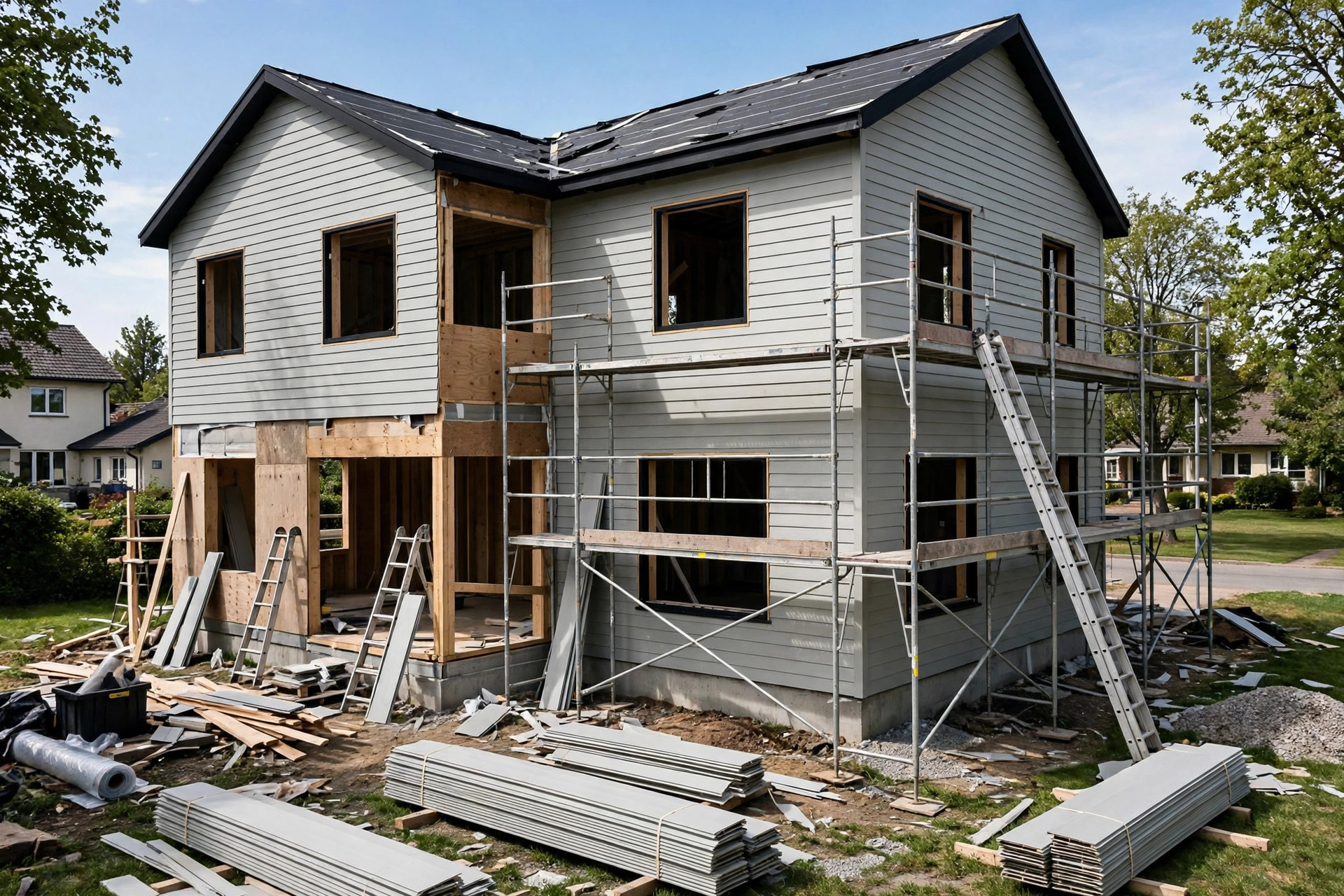
For new construction, siding decisions are driven by budget, architectural plans, energy code requirements, and long-term maintenance expectations. Choices made early affect framing details, flashing, trim, and the weather barrier — so siding should be selected during design, not as an afterthought.
Budget Sets the Field
Siding is one of the larger exterior line items, and material choice moves the budget significantly. Vinyl is generally the most economical installed option, fiber cement and engineered wood sit in the middle, and premium options like natural cedar or custom metal panels cost more. But smart builders look at total installed cost — material plus labor, trim, flashing, and painting — not just the price per square foot of panels.
Maintenance expectations belong in the budget conversation too. A cheaper material that needs repainting every several years can cost more over a few decades than a pricier low-maintenance option. Ask for lifecycle thinking, not just bid-day pricing.
Coordinating With the Build Timeline
Siding cannot start until the structure is dried in — roof on, windows and doors installed, weather barrier complete. Delays in any of those push siding back, and siding delays push final inspections. Builders sequence it carefully because exterior finishes are on the critical path to completion.
Material lead times matter as well. Standard vinyl and fiber cement are usually readily available, but custom colors, specialty profiles, or imported products can take weeks. Ordering early prevents the crew from standing idle waiting on materials.
Weather Barrier and Flashing Integration
New construction is the ideal time to get the wall assembly right, because everything is accessible. Key details include:
- Continuous weather barrier lapped shingle-style with taped seams
- Flashing properly integrated at windows, doors, roof-wall intersections, and deck ledger connections
- Kick-out flashing where roofs meet walls — a small detail that prevents enormous water damage
- Ventilated cavity or rainscreen gap where the design calls for it
These hidden layers determine whether the siding performs for decades or causes callbacks. They deserve as much attention as the visible cladding.
Energy Code Considerations
Modern energy codes increasingly require continuous exterior insulation or high-performance wall assemblies. This affects siding selection because the cladding must work over foam sheathing — fastening, trim details, and moisture management all change when foam is in the wall. Discuss the target assembly with your builder early so the siding choice and insulation strategy are designed together.
What Homeowners Should Ask
- What siding materials do you recommend for this design, and why?
- What does the full wall assembly include — barrier, insulation, flashing?
- How is moisture managed behind the cladding?
- What maintenance will this siding need, and what are the warranty terms?
- Are there neighborhood or HOA restrictions on materials or colors?
Frequently Asked Questions
When in the build should siding be chosen?
During design development — before framing begins. The choice affects structural details, window and door trim sizing, and the insulation strategy, all of which are hard to change later.
Can different sidings be mixed on one house?
Yes, mixing is common and often attractive — for example, fiber cement lap siding with board-and-batten accents or stone veneer on the front. Each transition needs proper flashing and trim details.
Who handles siding on a new build — the builder or a siding contractor?
Usually the general contractor hires a siding subcontractor. Homeowners working directly with builders should still ask about the siding crew's experience with the chosen material.
Does new construction siding need to acclimate?
Some materials, particularly wood and fiber cement, should acclimate to site conditions before installation. Your contractor will know the requirements for the chosen product.
Building a new home in the DC area? Washington DC Siding Pros connects homeowners and builders with local siding contractors experienced in new construction assemblies. Call (206) 360-4969 to get connected today.
Ready to Talk Siding?
Call (206) 360-4969 and get connected with a local Washington, DC siding contractor today.
☎ (206) 360-4969